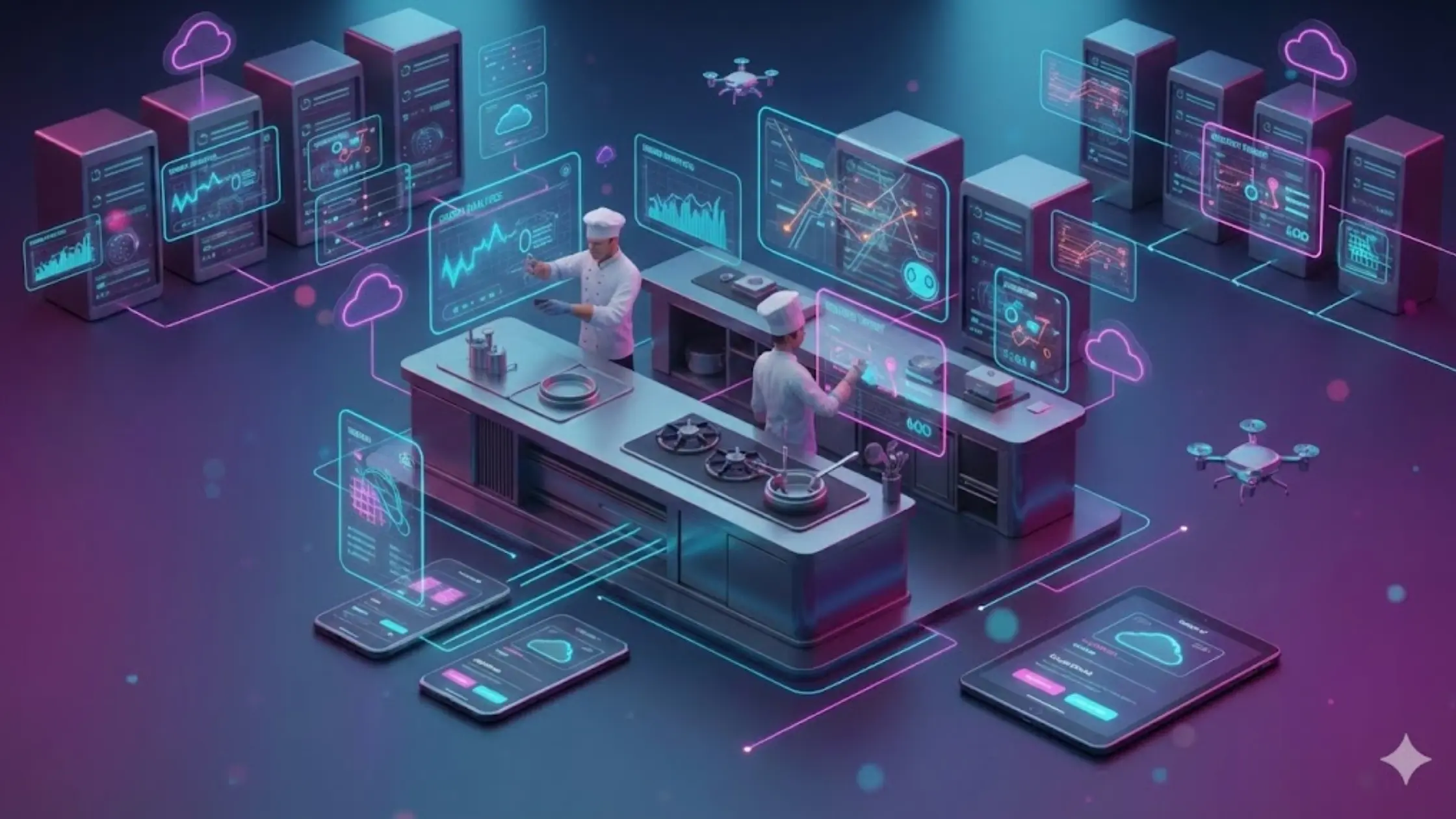
The global food landscape has shifted permanently. By 2026, the cloud kitchen app development market (also known as ghost kitchens or dark kitchens) is projected to become a trillion-dollar industry. Unlike traditional restaurants, cloud kitchens rely 100% on digital presence, making a robust, high-performing mobile application the heartbeat of the business.
Whether you are a startup looking for an MVP development agency to test a new concept or an established brand seeking a professional food delivery app development company to scale, this guide provides a comprehensive roadmap for 2026.
1. What is a Cloud Kitchen?
A cloud kitchen is a delivery-only restaurant that lacks a physical dining space. In 2026, this model has evolved into “Multi-brand Hubs,” where a single kitchen prepares menus for 5–10 different brands simultaneously. To manage this complexity, the software must be more than just an ordering tool—it must be an operational powerhouse.
2. Essential Features for a Cloud Kitchen App
To beat the competition, your app needs to cater to three distinct user groups: the Customer, the Kitchen Staff, and the Delivery Partner.
A. Customer-Facing Features
- Smart Search & AI Filters: Users should find food based on mood, dietary restrictions (keto, vegan), or delivery time.
- Real-time Order Tracking: Using GPS and WebSockets to provide millisecond-accurate updates.
- Multi-brand Cart: Allow users to order from different “virtual brands” within your kitchen in a single checkout.
- Loyalty & Gamification: AI-driven personalized discounts and reward points to increase retention.
B. Kitchen Management (Admin/Chef) Features
- Unified Dashboard: One screen to manage orders from your app, plus third-party aggregators (UberEats, DoorDash).
- Inventory Management: Real-time tracking of ingredients with “low-stock” alerts to prevent order cancellations.
- Dynamic Menu Management: The ability to toggle dishes “ON/OFF” instantly based on ingredient availability.
C. Delivery Partner Features
- Optimized Routing: AI-mapped routes to ensure multiple deliveries are handled in the shortest time.
- Earnings Tracker: A transparent interface for drivers to see tips and commissions.
3. The 2026 Tech Stack: Building for Scalability
A reputable food delivery app development company will recommend a stack that balances performance with cost-efficiency.
Component |
Technology Recommended for 2026 |
| Mobile Front-end | Flutter or React Native (Cross-platform efficiency) |
| Web Front-end | Next.js (For SEO-optimized ordering pages) |
| Back-end | Node.js or Go (High concurrency handling) |
| Database | PostgreSQL (Relational) & MongoDB (Non-relational for menus) |
| Cloud Hosting | AWS (Lambda) or Google Cloud Platform |
| Real-time Updates | Socket.io or Firebase Cloud Messaging |
| Payment Gateway | Stripe, PayPal, or Crypto-wallets |
| AI/ML | Python (For demand forecasting and personalized UX) |
4. Advanced Technical Trends in 2026
To truly outperform competitors, your app must integrate these “Next-Gen” technical elements:
- Hyperlocal SEO Integration: Ensuring your virtual brands appear in “food near me” searches via schema markup.
- API-First Architecture: Allowing your kitchen to easily plug into future tech like drone delivery or automated kitchen robotics.
- Predictive Analytics: Using historical data to predict which items will be popular on Friday nights, allowing you to prep ingredients in advance (Waste Reduction).
- Edge Computing: Processing data closer to the user to reduce latency in order transmissions.
5. The Development Process: Why Use an MVP Strategy?
Success in the cloud kitchen space isn’t about launching a “perfect” app; it’s about launching a “functional” one fast. Partnering with an mvp development agency allows you to:
- Validate the Concept: Test which cuisine performs best in a specific neighborhood.
- Reduce Initial Investment: Focus on core ordering features before adding expensive AI modules.
- Iterate Based on Data: Use real user feedback to polish the UI/UX.
Development Phases:
- Discovery & Wireframing: Defining the user journey.
- UI/UX Design: Creating an appetizing and intuitive interface.
- Sprints/Development: Coding the front-end and back-end in 2-week cycles.
- QA Testing: Stress testing the app for “peak hour” traffic.
- Deployment & Support: Launching on App Store/Play Store.
6. How Much Does Cloud Kitchen App Development Cost?
The cost varies based on complexity, the number of platforms, and the location of your development team.
- Simple MVP: $25,000 – $40,000 (Basic ordering, one brand, standard payment).
- Advanced App: $50,000 – $90,000 (Multi-brand, inventory management, basic AI).
- Enterprise Solution: $120,000+ (Fully automated kitchen integration, custom logistics, advanced predictive analytics).
Note: Working with a specialized food delivery app development company may have a higher upfront cost but saves money in the long run by avoiding technical debt.
7. Overcoming Industry Challenges
High Customer Acquisition Cost (CAC)
In 2026, the market is crowded. Your app must feature built-in referral programs and SEO-optimized landing pages to lower your dependency on paid ads.
Logistics Bottlenecks
Integration with third-party logistics (3PL) providers via APIs ensures that even if your private fleet is busy, the food reaches the customer while it’s hot.
Conclusion
Cloud kitchen app development in 2026 is no longer just about taking orders; it’s about managing data, optimizing logistics, and creating a virtual brand experience that rivals physical dining. By focusing on a robust tech stack and a smart MVP strategy, you can build a sustainable, profitable food tech business.
FAQ
Q1: How much does it cost to build a cloud kitchen app in 2026?
An MVP starts around $25,000–$40,000, while a feature-rich platform with AI-demand forecasting can range from $60,000 to $120,000+.
Q2: How long is the development timeline?
A specialized mvp development agency can launch a functional version in 12–16 weeks, whereas enterprise-grade solutions typically take 6–9 months.
Q3: Can one app manage multiple virtual brands?
Yes. Modern architecture allows you to run dozens of “ghost brands” (e.g., a pizza brand and a taco brand) through a single kitchen dashboard and a unified inventory system.
Q4: Do I need a custom app if I’m already on UberEats or DoorDash?
While aggregators provide reach, a custom app built by a food delivery app development company saves you 15–30% in commissions and gives you full ownership of your customer data.
Q5: What is “Order Throttling,” and why do I need it?
It is a tech feature that automatically slows down or pauses incoming orders when your kitchen hits maximum capacity, preventing staff burnout and late deliveries.
